June 1, 2020 outreach

LIGO-Virgo finds mystery object in mass gap
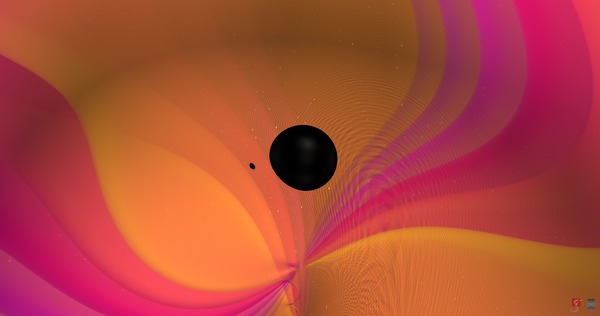
LIGO-Virgo finds mystery object in mass gap

On August 14, 2019, the two Advanced LIGO detectors in the US, at Hanford, Washington and Livingston, Louisiana, and the Advanced Virgo detector in Cascina, Italy, observed a gravitational wave signal produced by the inspiral and merger of two compact objects - one, a black hole, and the other of undetermined nature. The mass measured for the lighter compact object makes it either the lightest black hole or the heaviest neutron star ever discovered in a system of two compact objects, but we can’t be sure which it is. This is also the most asymmetric system observed in gravitational waves as of now. This event was detected in real time by the GstLAL inspiral pipeline which is developed and operated largely by the LIGO group at Penn State.

Full article

About our wordmark
Monica Rincon Ramirez

The IGC wordmark was created by Monica Rincon Ramirez while she was a graduate student at the Institute. Monica enjoys drawing new connections between fundamental theory and observations. Her graduate work included general relativity, loop quantum gravity, and quantum fields in cosmological backgrounds; her thesis focused on effective quantum corrections to gravitational phenomena from spinfoams and applications to cosmology. She received her PhD in 2024.

The wordmark symbolizes the scope of research at the IGC. The base represents quantum gravity, evoking the quantum geometrical picture from spinfoams and loop quantum gravity — approaches studied at the Center for Fundamental Theory. The middle shows galaxies embedded in a smooth surface characteristic of spacetime in general relativity and the larger physical scales studied at the Center for Theoretical and Observational Cosmology. The top curves to an extreme representing a supermassive black hole accompanied by an energetic jet, with a binary black hole pair nearby — the high-energy phenomena studied at the Center for Multimessenger Astrophysics.