Collaboration
Radio Neutrino Observatory in Greenland
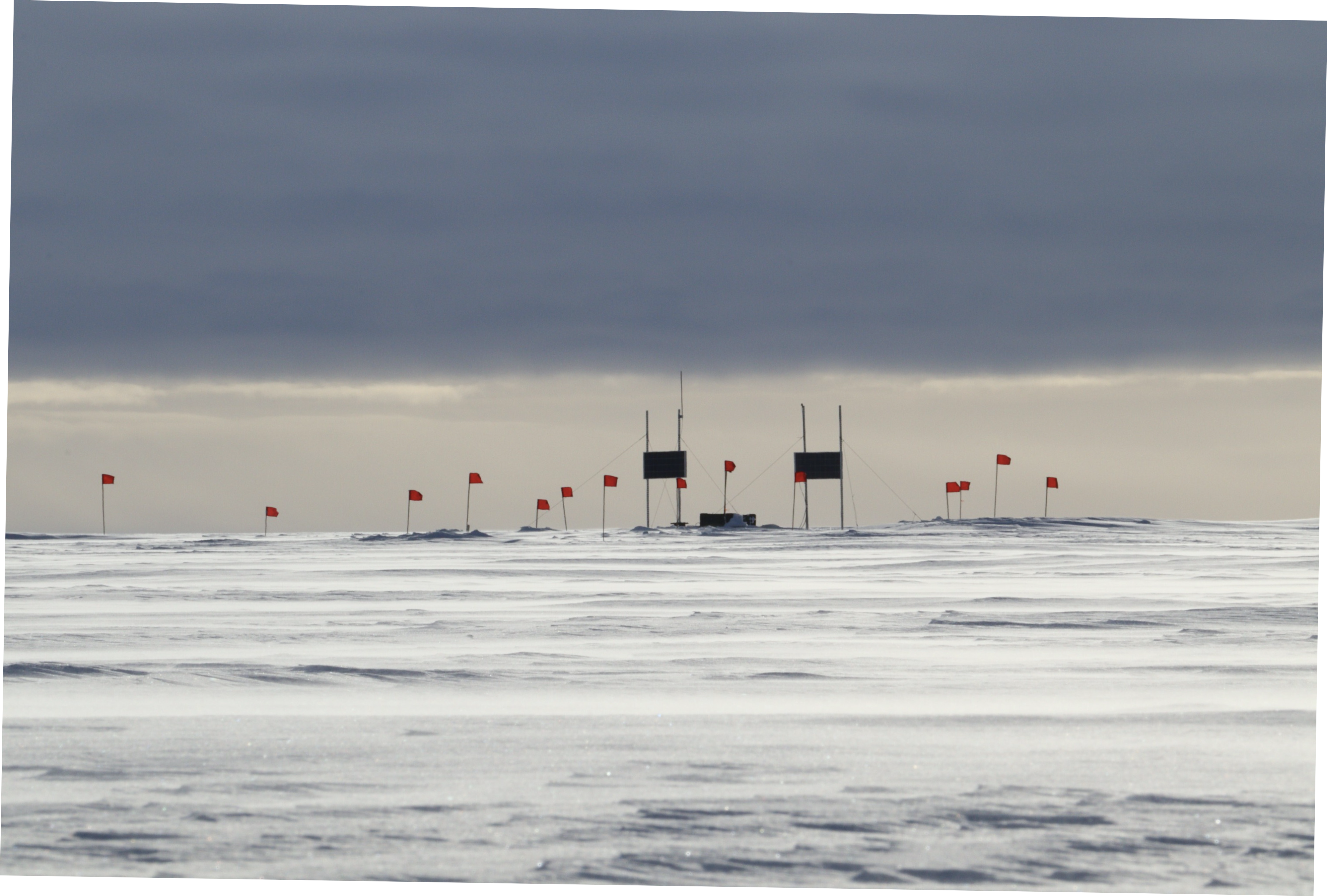
The Radio Neutrino Observatory in Greenland (RNO-G) is the first and largest neutrino telescope in the Northern hemisphere sensitive to the highest energy neutrinos. The experiment uses the antennas embedded at the surface and at 150 m below the surface of the ice to search for radio emission that occurs when neutrinos interact in the ice.
| Photo | Name | Role | Affiliations | Phone | Office | Centers | Research topics | |
|---|---|---|---|---|---|---|---|---|

|
Bryan Hendricks | Graduate Student | Physics | blh5615@psu.edu | 815-216-0835 | 204 Osmond Laboratory | IGC | Neutrinos |

|
Ryan Krebs | Graduate Student | Physics | rjk5416@psu.edu | (814) 865-7533 | 322 Osmond Laboratory | CMA, IGC | Multimessenger Astrophysics, Neutrinos |

|
James Tutt | Faculty | Astronomy | jht12@psu.edu | +1 814 865 6338 | 128A Davey Laboratory | IGC | Neutrinos |
| Photo | Name | Role | Affiliations | Phone | Office | Centers | Research topics | |
|---|---|---|---|---|---|---|---|---|

|
Kaeli Hughes | Postdoc | Astronomy, Physics | kaeli@psu.edu | +1 6142906343 | N/A Davey Laboratory | CMA | Cosmic Rays, Multimessenger Astrophysics, Neutrinos |

|
Marco Muzio | Faculty | Astronomy, Physics | msm6428@psu.edu | – | 322 Whitmore Laboratory | CMA | Cosmic Rays, Multimessenger Astrophysics, Neutrinos |