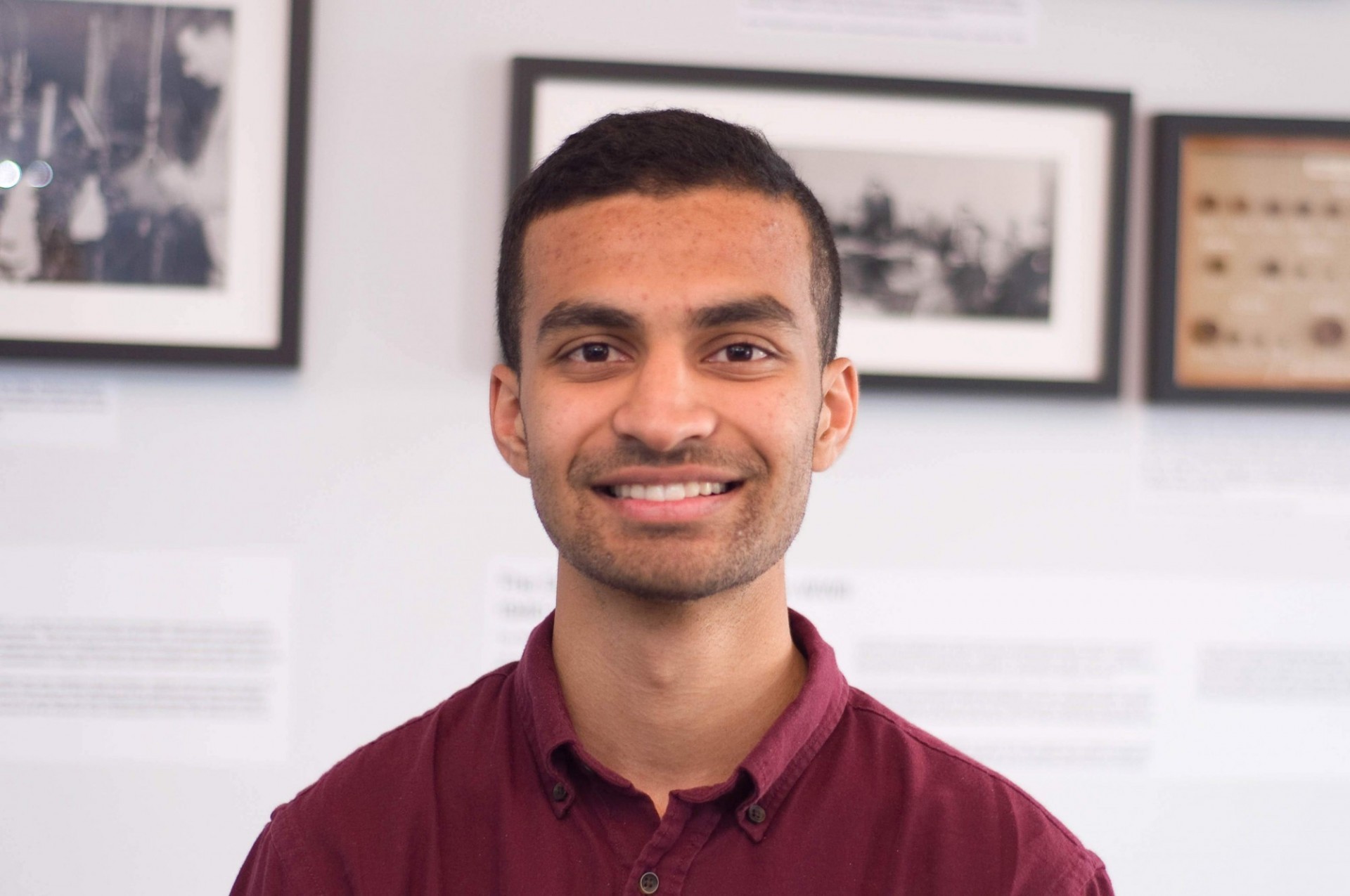
GAPP Seminar - Dhruv Desai

GAPP Seminar - Dhruv Desai

339 Davey and https://psu.zoom.us/j/93737760341?pwd=Qlc4bWFDU0taSHhJK0RHeWMvendHZz09
2022-12-13

Title: GRMHD Simulations of Neutrino-Driven Winds From Proto-Neutron Stars

Abstract: Formed in the aftermath of a core-collapse supernova or neutron star merger, hot proto-neutron stars (PNSs) launch neutrino-driven winds within milliseconds, with the winds themselves lasting for tens of seconds. The PNS wind has long been considered a potential site for the nucleosynthesis of heavy elements (Z>60) via the rapid neutron capture process (r-process). Previous work has found that such winds are not favorable for r-process element production. I will present results of general relativistic magnetohydrodynamic simulations of the PNS wind with weak interactions, advanced microphysics and neutrino absorption. I will discuss how physical mechanisms of rapid rotation and strong magnetic fields of a PNS may independently affect wind dynamics and how these effects may change r- process viability.

Schedule for GAPP Seminar - Dhruv Desai
TimeSpeakerTitle
13:30Dhruv DesaiGAPP: GRMHD Simulations of Neutrino-Driven Winds From Proto-Neutron Stars

About our wordmark
Monica The IGC wordmark was created by Monica Rincon Ramirez, while she was a graduate student at the Institute for Gravitation and the Cosmos (IGC). Monica enjoys drawing new connections between fundamental theory and observations. Her graduate work includes specialized topics in general relativity, loop quantum gravity, and quantum fields in cosmological backgrounds. In particular, her thesis work focused on finding effective quantum corrections to gravitational phenomena from spinfoams, and applications to cosmology. She received her PhD in 2024.

The wordmark symbolizes the scope and variety of research at the IGC. The base of the image represents quantum gravity, evoking the quantum geometrical picture from spinfoams and loop quantum gravity. These are among the approaches to fundamental questions studied at the Center for Fundamental Theory. The middle of the image represents the Center for Theoretical and Observational Cosmology by galaxies embedded in a smooth surface, characteristic of spacetime in general relativity and the much larger physical scales studied in cosmology. Finally, at the top, the surface curves to an extreme, representing a supermassive black hole accompanied by an energetic jet. These elements depict an active galactic nucleus, inspired by Centaurus A. Just to the right, a pair of black holes approaches merger. This top portion of the wordmark represents the Center for Multimessenger Astrophysics, which specializes in the study of high-energy phenomena in the universe.